Does Walgreen (WBA) Acquisition of Rite-Aid (RAD) Justify The Stock Price?
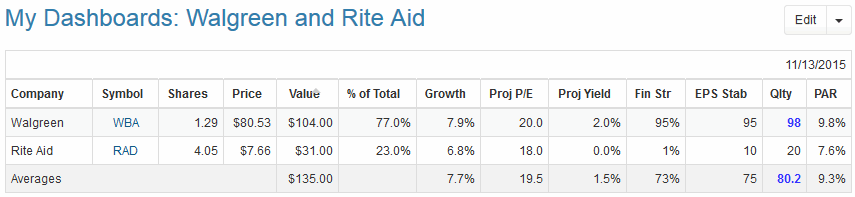
Merger & Acquisition Dashboard Analysis. The dollar values entered (104 and 31) reflect the annual revenues (2015E) for the two companies. Walgreen is three times the size of Rite-Aid. The key figures are (1) the return forecast (PAR) for Rite-Aid which suggests that WBA is not over paying for RAD. (2) It is normal and customary for a company to pay a price that delivers a sub-zero return forecast, or PAR (Projected Annual Return). In this case, 7-8% is a pretty good deal for WBA. (They’ll have considerable restructuring and store portfolio management to do in the wake of the deal) (3) The other consideration is the relatively weak quality ranking, financial strength and EPS stability of the long-suffering RAD. The combination here is simple weighted-average math. The more elusive answer is whether Walgreen can transfer culture and operating performance to the new assets.
We often are asked about merger & acquisition analysis. It really does boil down to the return forecast (at the offered price) as to whether the price is too high. Many, many transactions feature situations where the PAR for the acquired company is -10% or -5% and this is particularly true for technology sector mergers. And yes, Virginia, this overpaying in the guise of “synergies” is the root of the good will that ends on company financial statements.
Is Walgreen overvalued? At a PAR of 9-10%, “They” don’t think so. (Remember our return forecast is based on analyst consensus and sources like Value Line, Morningstar, S&P, etc.)
When you pick up the morning newspaper and read that the Rite-Aid stock price is trading at a 50% premium to yesterday’s close and that “the deal is clearly a favorable transaction” — ignore that. The only thing that matters is the long-term return forecast based on the new stock price. A comparison to yesterday’s stock price for anything is uninformative.
The management team at Walgreen is experienced and effective. It will be interesting to watch them make decisions, shedding stores and optimizing the portfolio — and preventing the combined company from falling to the average quality, financial strength and avoiding EPS disruptions as they tackle the challenge. We’ll check back in a couple of years from now to see how they’re doing.


 Expecting Alpha